The Nippon Maru is a famous sail training ship moored in Yokohama Harbor
Yokohama (横浜 / よこはま) is a city shaped by the sea. Located on the western shore of Tokyo Bay, it grew from a small fishing settlement into one of Japan’s great port cities, and its long connection with international trade has given it a distinctly outward-looking character. Even today, Yokohama can feel noticeably more open and cosmopolitan than many other Japanese cities, with its waterfront, historic foreign influences and maritime heritage remaining central to the city’s identity. The name, Yoko (横) Hama (浜) means, roughly, "wide/horizontal shore".
Yokohama is one of our favorite cities in Japan. Maybe because it is a port city, it is more open, more friendly with genuine interaction. We are not sure, but we use it as a base when we visit the Kanto region because it is so well-connected and friendly.
The character that has developed in Yokohama has its historical roots as a seaport. In 1859, Yokohama was among the first Japanese ports opened to foreign trade after more than two centuries in which Japan had severely restricted contact with the outside world. Foreign merchants, diplomats and other residents established themselves around the new port, and Yokohama became one of the principal gateways through which Western technology, fashions, food and ideas entered modern Japan. The legacy of that period can still be seen around the historic port districts and in the international character of the city.
Yokohama’s connections with Asia are equally important. The city is home to Yokohama Chinatown, the largest Chinatown in Japan and one of the largest in the world. Its densely packed streets are filled with Chinese restaurants, food stalls, shops, temples and elaborate gateways, making it one of Yokohama’s most distinctive areas. Together with the historic port, the modern Minato Mirai waterfront and the city’s maritime attractions, Chinatown reinforces the sense that Yokohama has always looked beyond Japan’s shores.
Some History
Pre-Western Contact
Before its opening to the West in 1853, Yokohama was a quiet, sleepy fishing village. As noted above, its name means sandy shore, and it was just a village with no historical significance. Archeaological evidence shows early settlement, perhaps dating back 15,000 years to the Jomon period.
During the Feudal Era (Kamakura to Muromachi Periods) Yokohama was adjacent to the Kamakura Shogunate, and the Kanazawa district of modern Yokohama was a vital strategic outpost. During the Edo Period, with the Tokugawa Shogunate gaing ascendency in Tokyo, the importance of the Yokohama area gained importance, although the coastal area of modern-day Yokohama remained populated with perhaps just 100 families.
It was precisely because this village was so isolated and politically insignificant that the Tokugawa Shogunate chose it in 1859 — hoping to keep foreign merchants contained and far away from the busy Tōkaidō highway.
The Perry Arrival
In 1853, U.S. Commodore Matthew C. Perry sailed his gunships into Tokyo Bay, forcing Japan to end its centuries-old sakoku (isolationist) policy. Under the Harris Treaty, the nearby post town of Kanagawa was designated for foreign trade. Fearing disruption to the vital Tōkaidō road, authorities instead shifted the port in 1859 to the small, deep-water fishing village of Yokohama-mura.
Yokohama quickly became a bustling center for exporting raw silk and tea, giving rise to foreign settlements and Japan's largest Chinatown, and the point where outside influence first penetrated Japanese society. Incidentally, it is where Ramen was introduced to Japan
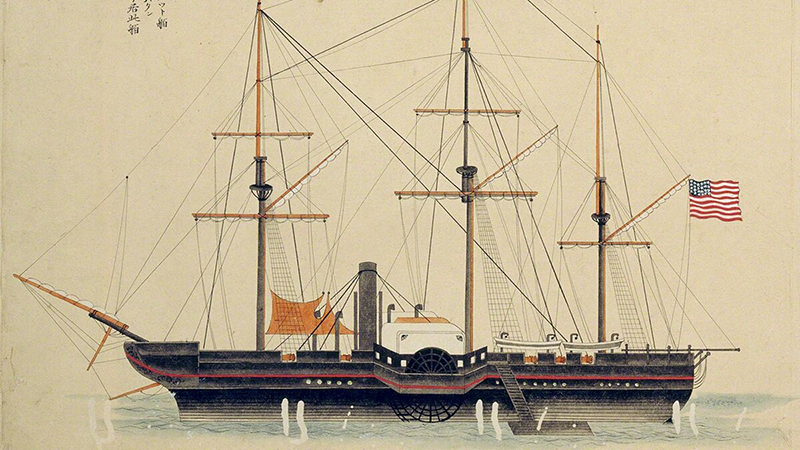
Admiral Perry's Black Ship
Modernization and Industrial Growth
During the period AD1868-1923 Yokohama grew rapidly, and included firsts suchh as the first railway (AD1872) connecting Yokohama to Tokyo, and significant land reclamation and heavy industrialization along the northern coast towards Kawasaki
The Great Kantō earthquake of AD1923 leveled the city, and Allied air raids destroyed roughly 42% of the city by AD1945.Following U.S. military requisition of port and urban areas, the city launched ambitious post-war recovery efforts. Six major projects in th e1960's and 1970's spearheaded massive urban renewal, inclluding the futuristic Minato Mirai 21 waterfront district, new subway lines and new bay bridges.
About The Area
Yokohama is on the western shore of Tokyo Bay in Kanagawa Prefecture, about 30 km south east of central Tokyo. It’s Japan’s second-largest city, with roughly 3.7 million people across 18 wards and about 437 km2. The city grew up around its port, which opened to foreign trade in 1859 and is still one of the busiest in Japan. Much of the central waterfront, including the Minato Mirai district, sits on reclaimed land.
The city’s terrain splits in two. Along the bay is a narrow strip of flat, low ground that holds the port, the old commercial center and the main rail lines. Inland, the ground rises into hills and plateaus: the Tama Hills in the northern wards and the Miura Hills in the south. The highest point in the city, Ōmaruyama, is only about 156 meters, but the hills are steep enough that many neighborhoods are built on terraces and slopes. The Bluff (Yamate), where foreign merchants settled in the 19th century, is one of them. Two rivers, the Tsurumi and the Ōoka, cross the city and drain into Tokyo Bay.
Yokohama borders Kawasaki to the north, and the built-up area runs into Tokyo without a break. To the south, the Miura Peninsula separates Tokyo Bay from Sagami Bay. Kamakura, Japan’s capital in the 12th to 14th centuries, is about 20 km south, and the naval port of Yokosuka sits next to the city’s southern edge. To the west are the volcanic Hakone area and Mount Fuji, about 80 km away and visible from the city on clear days, mostly in winter.
Because of its location, Yokohama makes a practical base for the region: Tokyo, the Kamakura temples, the Shonan coast and Hakone are all reachable by train in about an hour or less.
Map of Yokohama
Yokohama and the Greater Tokyo Metropolitan Area
When to Go
Yokohama is a good destination throughout the year, with each season offering a slightly different experience. Spring, especially from March through May, is one of the most pleasant times to visit, with mild temperatures, generally comfortable humidity and plenty of opportunities to enjoy the city on foot. Cherry blossom season usually falls around late March and early April, bringing extra color to parks and waterfront areas, although this is also a popular travel period throughout Japan.
Autumn, from late September through November, is another excellent choice. The heat and humidity of summer gradually ease, skies are often clearer, and temperatures become ideal for exploring areas such as Minato Mirai, Yamashita Park and Yokohama Chinatown. Autumn foliage appears later than in many parts of northern Japan, often becoming most noticeable during November and into early December.
Summer, particularly July and August, is hot and humid, with daytime temperatures regularly reaching around 30°C or higher. June and early July also coincide with Japan's rainy season, when periods of persistent rain are possible. Summer remains lively, however, with festivals, fireworks and waterfront events, and much of Yokohama's sightseeing can easily be combined with indoor attractions, shopping and dining when the weather becomes uncomfortable.
Winter can be brisk, but Yokohama is rarely severely cold. From December through February, daytime temperatures are often cool but quite manageable, while nights can approach freezing on colder days. Snow is uncommon and usually short-lived when it does occur. Winter also tends to bring relatively dry, clear weather, making it a surprisingly good time for sightseeing, particularly if you prefer fewer crowds and do not mind wearing a warm coat.
Of course, when to go is not just dictated by the weather. Yokohama has a number of festivals thoughout the year, including Lunar New Year/Chinese New Year which is celebrated in Yokohama's Chinatown in Jan/Feb, Yokohama Kaikosai, the Port Opening Festival in May/June, the Yokohama Sparkling Twighlight in mid-Summer in Yamashita Park, and the Yokohama Jazz Promenade in early October.
Typical Weather Throughout the Year — Yokohama
Historical monthly averages for Yokohama based on the 1991–2020 climate period.
10-Day Weather Forecast for Yokohama
Forecasts are provided for general information only and may be inaccurate or change without notice. Travel With Mark makes no warranties regarding weather information and accepts no responsibility for decisions, losses, delays, injuries, or other consequences arising from its use.
The People
About 3.7 million people live in Yokohama. Most residents are not from old local families. When the port opened in 1859, Yokohama was a small fishing village, and the city grew mainly through migration: first merchants and laborers from other parts of Japan, then foreign traders, and later, in the 20th century, people moving out of Tokyo. People born and raised in the city call themselves Hamakko (“children of the beach”), and many identify more with Yokohama than with Kanagawa Prefecture or Greater Tokyo.
Yokohama has had a foreign community for longer than almost anywhere else in Japan. Western merchants settled around the Kannai district and on the Bluff from the 1860s, and Chinese traders and craftsmen arrived at the same time. Yokohama Chinatown, which grew out of that settlement, is now the largest in Japan. Today the city has more than 100,000 registered foreign residents. The largest groups are Chinese, Korean, Vietnamese and Filipino, and there are smaller long-established Western and South Asian communities.
Much of Yokohama works elsewhere. A large share of employed residents commute to Tokyo, and the northern wards in particular are mostly residential. The city’s own economy is built on the port, logistics, manufacturing along the bay, and the corporate offices and services concentrated in Minato Mirai and around Yokohama Station. As in the rest of Japan, the population is aging, and after decades of growth the city’s total population has started to decline slightly.
For visitors, this history shows in practical ways. Signs, transit announcements and menus in central areas are often in English as well as Japanese, and staff in hotels and major attractions are used to foreign guests. Outside the tourist districts, English is less common, so a few Japanese phrases or a translation app will help.
The Cuisine
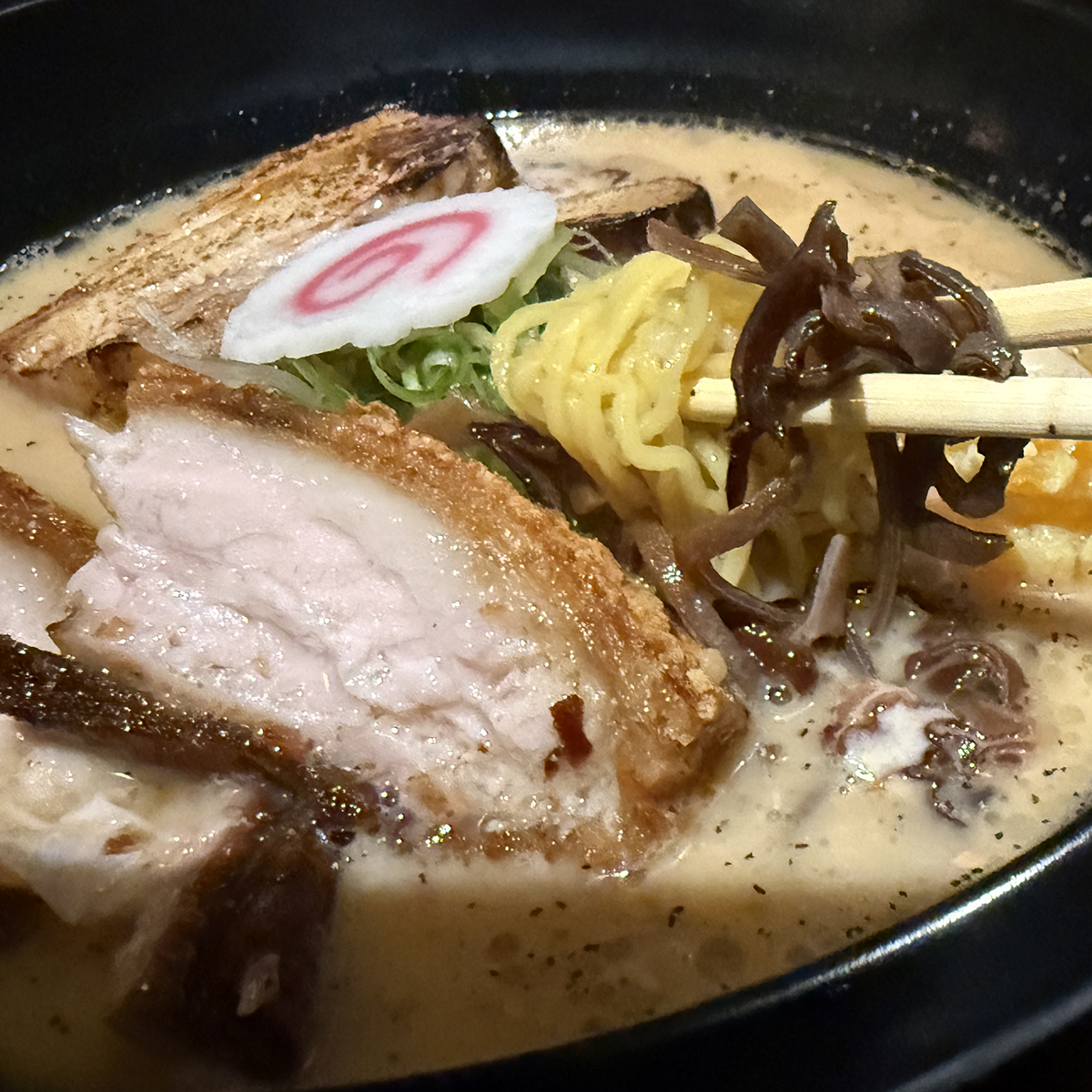
Yokohama’s food reflects its history as Japan’s main point of contact with the outside world after 1859. Many dishes now considered everyday Japanese food came in through the port, were adapted here and then spread to the rest of the country. The most important of these is ramen. Chinese wheat-noodle soups were served in Yokohama’s Chinese quarter, then known as Nankinmachi, from the late 19th century. Under names like shina soba and Nankin soba, they were introduced to Japanese diners in the city and carried to Tokyo, where the first ramen shops run for a mainly Japanese clientele opened in the early 1900s. The Shin-Yokohama Ramen Museum, opened in 1994, covers this history and hosts branches of well-known regional ramen shops from across Japan.
The city also has its own ramen style. Iekei (“house-style”) ramen started at Yoshimuraya in 1974. It combines a pork-bone and soy-sauce broth with chicken oil, thick straight noodles, spinach, nori and chashu, and customers usually choose how firm the noodles are, how rich the broth is and how much oil goes in. Iekei shops are now found throughout Japan. A lesser-known local dish is sanmā-men, a noodle soup topped with stir-fried bean sprouts and vegetables in a thickened sauce, which is found mainly in Yokohama and the rest of Kanagawa.
Yokohama played a similar role in yōshoku, the Western-style cooking that Japan adapted as its own. Beef eating, which was rare in Japan before the Meiji era, was popularized partly through Yokohama’s gyūnabe (beef hotpot) restaurants, which opened in the late 1860s and preceded sukiyaki. Spaghetti Napolitan, seafood doria and pudding à la mode are all credited to the Hotel New Grand, which opened in 1927 and still serves them. Several firsts in Japan are also linked to the city: commercial beer brewing, from the Spring Valley Brewery founded in 1870 (a predecessor of Kirin), and ice cream, first sold in the Bashamichi district in 1869.
Chinatown remains the center of the city’s food scene, with hundreds of restaurants and food stalls serving Cantonese, Shanghainese, Sichuan and Taiwanese cooking, along with steamed buns and other street food. The other local staple is shūmai from Kiyoken, which has been sold at Yokohama Station since 1928. The dumplings are made to be eaten at room temperature, and Kiyoken’s shūmai bentō is one of the best-known station lunch boxes in Japan.
Getting There & Getting Away
Air
Yokohama does not have its own airport, and relies on Tokyo's Haneda Airport for air connections. Haneda is much more convenient than Narita Airport as Narita and Yokohama are on opposite sides of Tokyo Bay.
It is easy to get from Yokohama to Haneda. By rail, you can take the Keikyu line from the Haneda terminal to Yokohama's main station (not Shin-Yokohama, the bullet train station). There is also a direct limousine bus between the airport and Yokohama station, although I can tell you from experience, its a little hard to find on the Yokohama end. I prefer the Keiku line.
A taxi or ride-share between Yokohama and Haneda will take about 40-50 minutes depending on traffic, and probably cost around $80, and they are safe, couteous and reliable.
Train
Yokohama’s main long-distance link is Shin-Yokohama Station, a stop on the Tokaido Shinkansen. Every Nozomi, Hikari and Kodama service stops there, so there are frequent bullet trains west to Nagoya (about 1 hour 20 minutes), Kyoto (about 2 hours) and Shin-Osaka (about 2 hours 15 minutes). Many Nozomi trains continue on the Sanyo Shinkansen to Hiroshima and Hakata in Fukuoka. Tokyo is under 20 minutes away by Shinkansen. Since 2023, the Sotetsu and Tokyu Shin-Yokohama lines have connected Shin-Yokohama directly to more of the surrounding rail network, so you no longer always have to change to the subway or JR Yokohama Line.
For trips north and east, you’ll usually change at Tokyo Station, about 25–30 minutes from Yokohama Station on the JR Tokaido or Yokosuka lines. From there you can catch the Tohoku, Hokkaido, Joetsu and Hokuriku Shinkansen. Yokohama Station is also served by a few long-distance conventional trains: the Narita Express to Narita Airport, the Odoriko limited express to the Izu Peninsula, and the overnight Sunrise Izumo/Seto sleeper to western Japan. The Shonan-Shinjuku Line runs direct to Shinjuku and on to Saitama, so overall Yokohama is very well connected without needing to go through central Tokyo for most westbound trips.
Ferry
There are no direct ferry services from Yokohama, despite it being a major cruise port. For local Japanese ferries to other places you need to get to Yokosuko, where there are ferry connections to places like Kyushu, the Iza Islands and Ogasawara
It is worth mentioning that trans-Pacific cruises on major cruise lines can be terminated or orginated in Yokohama, and the connections to/from the port are very easy. Yokohama is a port city, and everything is right in town so you can base yourself here for a couple of days before or after your cruise.
Getting Around
Where Am I?
Find or change hotel
Choose the matching name and address below. You can also search for your hotel's street address.
Hotel search: Photon / © OpenStreetMap contributors. Check the selected location. Transit directions will be added later.
Walking directions
Routing: OSRM / FOSSGIS · © OpenStreetMap contributors · Fix the map
Walking directions send your current location and hotel coordinates to the routing service when you press the button.
Click the map button to locate your current position on the map. Locations services need to be enabled on your device
Yokohama subway map
Open the map to explore lines and stations.
Subway
Yokohama has one of the densest rail networks in Japan, and for most visitors trains are the main way to get around. Yokohama Station is the city's central hub and main interchange, served by JR, Tokyu, Keikyu, Sotetsu, the Minatomirai Line and the municipal subway. It is one of the busiest stations in the world, so allow extra time to find your platform. JR lines, including the Tokaido, Yokosuka, Keihin-Tohoku/Negishi and Shonan-Shinjuku lines, connect the city with Tokyo, Kamakura and the rest of the region. The Tokyu Toyoko Line runs to Shibuya and continues directly onto the Minatomirai Line, which serves Minato Mirai, Bashamichi and Motomachi-Chukagai (for Chinatown). Keikyu is the fastest rail link to Haneda Airport and the Miura Peninsula. Tokaido Shinkansen bullet trains stop at Shin-Yokohama, about 10 minutes north of the center by subway.
The Yokohama Municipal Subway has two lines. The Blue Line runs north–south through the city, linking Shin-Yokohama, Yokohama Station, Sakuragicho and Kannai, and is the most useful line for visitors. The Green Line serves mainly residential areas in the northern wards. Rechargeable IC cards such as Suica and PASMO, including the mobile versions, work on all trains, subways and buses in the city and in the rest of the Tokyo area. Day passes are also available. The Minato Burari Ticket, for example, covers the subway and municipal buses within the central sightseeing area.
Buses fill the gaps between stations and are the easiest way to reach places like Sankeien Garden and parts of the Yamate (Bluff) district. On most municipal buses you board at the front and pay a flat fare when you get on. The Akai Kutsu ("Red Shoes") bus is a retro-style loop service built for visitors. It connects Sakuragicho Station, Minato Mirai, the Red Brick Warehouse, Chinatown, Yamashita Park and Motomachi, with stops announced in English.
Transport along the waterfront is also part of the experience. The Sea Bass water bus runs between Yokohama Station (East Exit), Minato Mirai, the Red Brick Warehouse and Yamashita Park, and gives a useful view of the harbor along the way. The Yokohama Air Cabin, Japan's first urban ropeway, opened in 2021 and carries passengers over the water between Sakuragicho Station and Unga Park, next to the Red Brick Warehouse. Harbor cruises leave from Osanbashi Pier and Yamashita Park.
Central Yokohama is compact, and walking is often faster than taking a train for short trips. A continuous waterfront promenade runs from Minato Mirai along the Kishamichi walkway to the Red Brick Warehouse, Osanbashi Pier and Yamashita Park. From there, Chinatown, Motomachi and Kannai are all within about 15 minutes on foot. The walk up to the Yamate hills is short but steep, so many visitors take the bus up and walk down. Shin-Yokohama and the northern wards are not within walking distance of the center. Shared bicycles from the "baybike" scheme are available at docks around the central area, but dedicated bike lanes are limited.
Taxis are plentiful at stations and hotels and can be hailed on the street. A red light in the windscreen means the taxi is free, and the rear door opens and closes automatically. Most taxis accept credit cards and IC cards, and ride-hailing apps such as GO and Uber work in the city. Taxis are a sensible choice for late evenings, for luggage, or for hillside destinations. Driving is rarely necessary for visitors staying in the central city. Japan drives on the left, overseas visitors need an International Driving Permit valid in Japan, parking is limited and expensive, and expressway tolls add up quickly, so unless you are experienced driving in Japan, it is probably not advisable.
Practicalities
Official Government Travel Advisories
 United States
Level 1: Exercise Normal Precautions
in Japan.
Updated 15 May 2025
View full U.S. Department of State travel advisory for Japan
 United Kingdom
FCDO travel advice for Japan. Includes safety and security, insurance, entry requirements and legal differences.
Latest update: Addition of information about flooding and heavy rain ('Safety and security' page).
Updated 28 August 2026
View full FCDO travel advice for Japan
Emergency Contacts
TBD
Copyright © 2026 travel-with-mark.com. All rights reserved. No part of this website or any of its contents may be reproduced, copied, modified or adapted, without the prior written consent of the owner, unless otherwise indicated for stand-alone materials. Unauthorized use is strictly prohibited. All trademarks, service marks, and trade names used in this website are the property of their respective owners and are used for identification purposes only. Your access to and use of this website is subject to our terms and conditions. Details of our privacy practices may be found in our privacy notices